

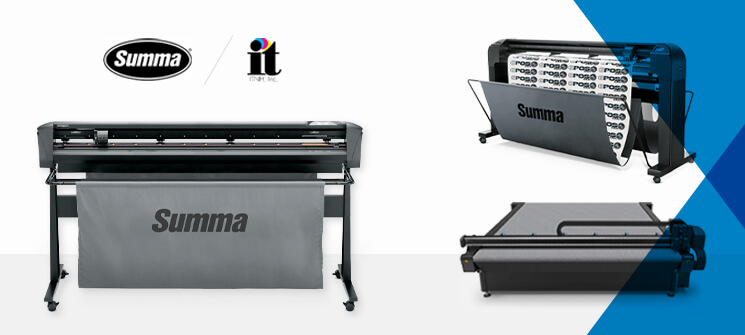
Selecting the right cutting equipment is a defining factor in the productivity and quality of any print business. In the realm of cutting technology, drag technology cutters and tangential plotters have made a name for themselves with their unique abilities and varied applications.
Gaining a solid understanding of these essential tools is about more than just technical knowledge—it’s a strategic move towards optimized operations and a thriving business. So, let’s dive into the world of these cutters, highlighting benefits, challenges and industry applications that could shape the future of your print endeavors.
Advantages and Disadvantages of Drag Cutters
Advantages and Disadvantages of Tangential Cutters
Comparing Cutters: Media Response
Understanding Cutting Types
Drag cutters and tangential plotters, with their unique operational principles and application areas, offer specific advantages that can significantly influence a print business’s efficiency and output. Understanding the mechanics and functionalities of these cutting types can help businesses strategically align their operations with their objectives, maximizing productivity and quality. Let’s find out how.
Drag Cutters: Simplified Precision
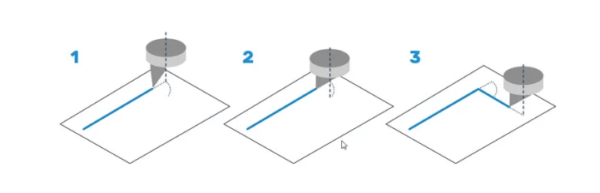
A drag cutter, also known as a swivel cutter, uses a small blade attached to a swiveling head. As it moves across material, the blade — quite literally — drags along to create the intended cut.
This cutter type is commonly used for:
- Signage and window graphics: Drag cutters are perfect for crafting vibrant, precise signs and graphics that draw attention and communicate effectively.
- Craft and hobby applications: The cutter’s simplicity and accuracy make it ideal for hobbyists who need to create intricate designs on lighter materials.
- Apparel: In the textile industry, drag cutters are used to cut templates or stencil designs for clothing items.
- Graphic design: These cutters serve graphic designers well for prototype development, design testing and other lighter-duty applications.
Tangential Cutters: For Higher Precision & Complexity
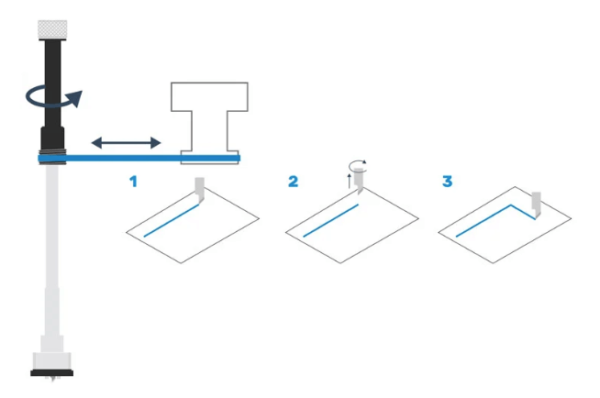
Tangential plotter cutters offer a unique operational approach. Instead of dragging the blade, these cutters have a motor that controls the blade’s direction along the cutting path. This motor raises, lowers and even rotates the blade, allowing for cleaner, more precise cuts.
The unique mechanics of tangential cutters make them preferable in various industries, including:
- Automotive: Tangential cutters are suited for cutting dense and rigid materials, such as gaskets and protective films used in the automotive industry.
- Aerospace: Their high precision and ability to handle tough materials make these cutters a top choice in the aerospace sector.
- Signage and graphics: For high-quality, large-volume signage and graphics, tangential cutters deliver with precision and speed.
- Packaging: The cutter’s ability to handle thick materials is helpful in the packaging industry, especially for cutting corrugated cardboard and protective foam.
- Textiles and fashion: For cutting intricate patterns in a variety of fabrics, tangential cutters offer the precision and flexibility required of the craft.
Advantages & Disadvantages Of Drag Cutters
Drag cutters offer a range of benefits, such as:
- Lower costs: Drag cutters are generally less expensive to purchase and maintain.
- Simplicity of operation: These cutters are easy to use, making them great for beginners or less complex applications.
- Suitability for light-duty applications: Drag cutters excel when used on lighter materials such as vinyl or paper.
However, drag cutters also come with some drawbacks, including:
- Limited precision: While suitable for many applications, drag cutters may not provide the same level of accuracy as tangential cutters.
- Difficulty with tougher materials: They may struggle to cut thicker or more durable materials.
- Shorter blade life: Given their operational methodology, drag cutters tend to have a shorter blade life.
Advantages & Disadvantages Of Tangential Cutters
Tangential cutters, while more complex, also present distinct advantages, such as:
- Higher precision: These cutters provide superior exactness, especially when dealing with intricate designs or thick materials.
- Ability to handle thicker materials: They can cut through tougher, denser materials, extending their usability.
- Longer blade life: Due to their operational mechanics, tangential cutters typically offer a longer blade life.
However, these benefits come with potential drawbacks, including:
- Higher initial cost: Tangential cutters can be more expensive due to their more complex design.
- More complex operation: They require a higher skill level to operate effectively.
- More maintenance requirements: Regular maintenance is essential to ensure optimum performance.
Comparing Cutters: Media Response & More
The effectiveness of drag and tangential cutters depends on the types of print media used. For example, a drag cutter — sometimes referred to as a vinyl drag knife — works exceptionally well with lighter materials. However, they might struggle with tougher, denser materials. On the other hand, tangential cutters, due to their sophisticated operation, handle a broad spectrum of materials, from light papers to dense cardstock and fabric.
To help you visualize the key differences between the two, review the following table:
| Factor | Drag Cutter | Tangential Cutter |
| Initial Cost | Typically lower, making it a cost-effective option for startups and small businesses | Higher due to more complex mechanics and precise operation |
| Operation Difficulty | Generally easy to use, with simpler mechanics and user-friendly interfaces | May require training to fully utilize due to complex operation and advanced features |
| Precision | Ideal for simple, straightforward cuts; might struggle with intricate designs | Offers superior precision, perfect for detailed and intricate designs |
| Blade Life | Blade tends to wear out faster due to the dragging operation, requiring frequent replacements | Longer blade life because of the controlled cutting movement, reducing frequent replacement needs |
| Material Handling | Best for light materials such as vinyl, paper, light cardstock | Can handle a wide range of materials from light to dense, including cardstock, fabric, thick foam and more |
| Maintenance | Lower maintenance requirements, mainly due to its simplicity | More regular maintenance required to keep the complex components functioning optimally |
| Typical Applications | Signage, window graphics, craft and hobby applications, apparel and graphic design | Automotive, aerospace, signage and graphics, packaging, textile and fashion |
*Please note that this table provides a general comparison and the specifics might change based on models and brands of cutters under consideration.
How ITNH Can Assist
Selecting the perfect cutter for your specific needs is vital, and at ITNH, we’re committed to guiding you through that process. We listen to your requirements, assess your materials and job types, understand your usage patterns and budget and recommend a cutter that offers the best match and value.
We support you by:
- Reviewing your materials and cutting requirements.
- Providing sample cuts on your specific materials to showcase performance.
- Offering remote or in-person demonstrations to familiarize you with the cutter’s operation.
- Inviting OEM expertise into the conversation for complex or specialized applications.
The Cutting Edge: Final Thoughts
Choosing between a drag cutter and a tangential cutter is a strategic choice that influences your output quality and business growth. However, armed with detailed knowledge about both cutter types, you’re now better equipped to make an informed decision that aligns with your specific needs and operational context.
Remember, the perfect cutter for your business is the one that offers a balance between cost-effectiveness, performance efficiency and operational simplicity. And while this guide presents a comparative analysis of both cutter types, nothing beats personalized recommendations tailored to your unique needs.
So, as you embark on this journey to enhance your production process, know that you’re not alone. The team at ITNH is ready and eager to assist, sharing their expertise and dedication to customer success every step of the way.
Need more advice? Looking for a personalized consultation? Get in touch with us at ITNH. We’re here to help you navigate the world of print business effectively and efficiently.