
5 Key Advantages of UV Hybrid Printers for Modern Print Shops
It’s no surprise that Mimaki’s new UJ330H-160 hybrid printer has got the market into a frenzy! It looks to be amazing addition to the Mimaki portfolio. With that said, let’s explore when and a where a UV-curable hybrid printer is a good fit. At the bottom, you find a link to “ITNH’s top 4 UV -Curable Hybrid Printers” in which the new Mimaki is reviewed along other leading models.
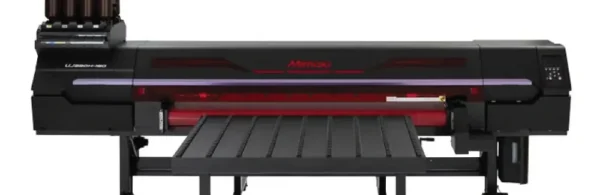
When evaluating UV printing technology, hybrid printers stand out as one of the most practical and cost-effective solutions available today. Designed to handle both roll media and rigid substrates, they offer a level of flexibility that many shops simply can’t afford to ignore. Here are five key attributes that set UV hybrid printers apart:
1. True Versatility
Hybrid printers combine roll-to-roll and flatbed capabilities into a single platform. This means you can print on flexible materials like vinyl and textiles, as well as rigid substrates such as boards and panels—all without needing multiple machines. The result? Significant space savings and a more streamlined production environment.
2. Easier Installation & Footprint
Unlike traditional flatbed printers, hybrids are designed with accessibility in mind. Their form factor allows them to fit through standard doorways and navigate tighter spaces, making installation far less complicated. For many shops, this can be the difference between upgrading equipment or being limited by building constraints.
3. Superior Roll Media Handling
Hybrid printers excel at handling thicker and more complex roll materials. Whether it’s polyurethane-coated fabrics (like faux leather) or other specialty substrates, hybrids provide the stability and control that standard roll printers often lack. This opens the door to higher-margin applications that other devices simply can’t manage reliably.
4. Efficient Rigid Board Workflow
With hybrid technology, rigid printing becomes a continuous, production-ready process. Operators can feed boards consistently and even print multiple pieces (“multi-up”) in a single pass to maximize throughput. This efficiency translates directly into faster job turnaround and increased productivity.
5. Strong Economic Value
Perhaps most compelling is the cost advantage. Hybrid printers typically come in at a lower price point than true flatbeds with comparable capabilities. When you factor in their dual-purpose functionality—eliminating the need for separate roll and rigid machines—they deliver exceptional value and ROI for growing print businesses.
The Bottom Line
For shops looking to expand capabilities without overextending budget or space, UV hybrid printers offer a smart, scalable solution. They strike the perfect balance between performance, flexibility, and cost—making them an ideal choice for today’s demanding print environments.